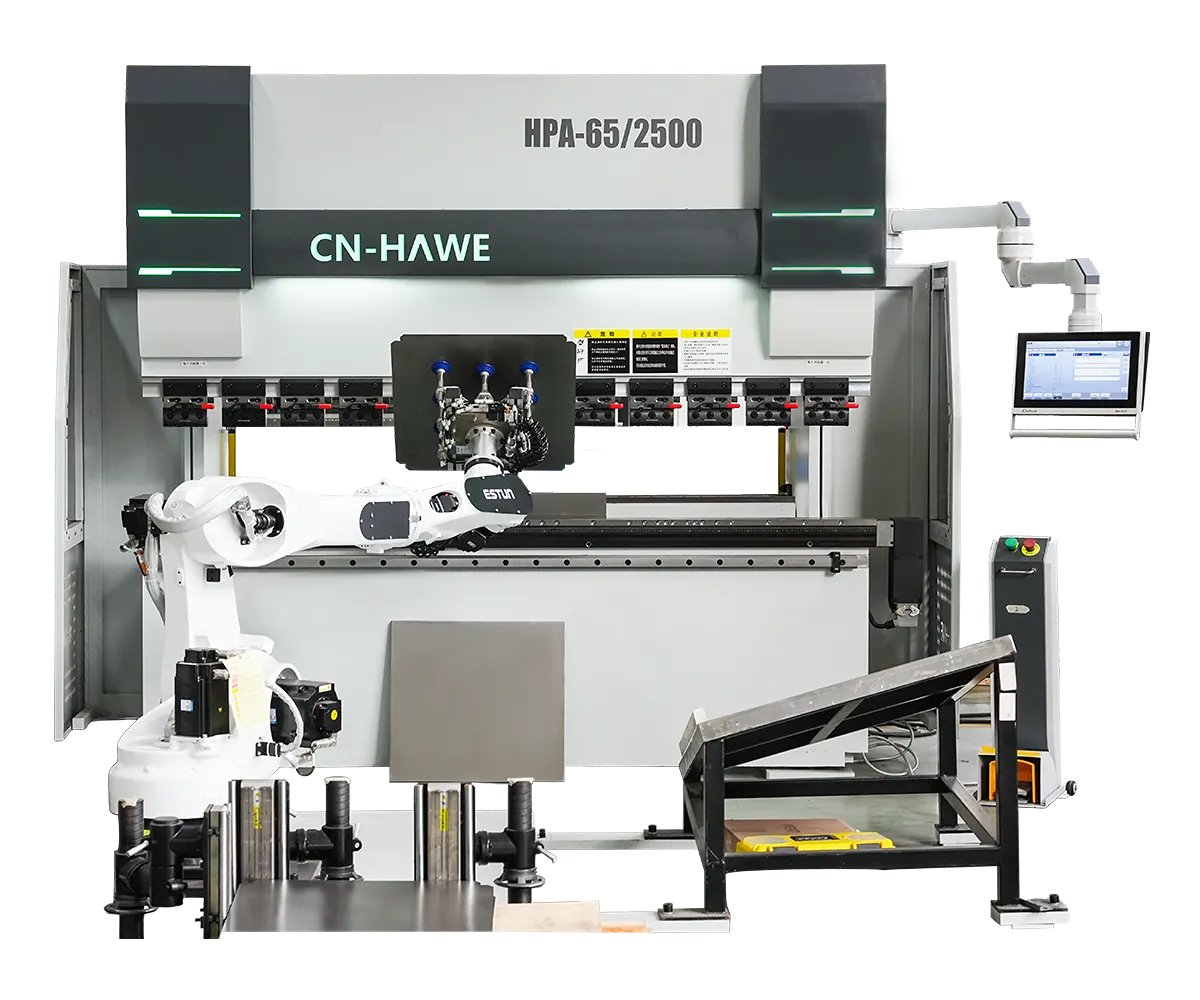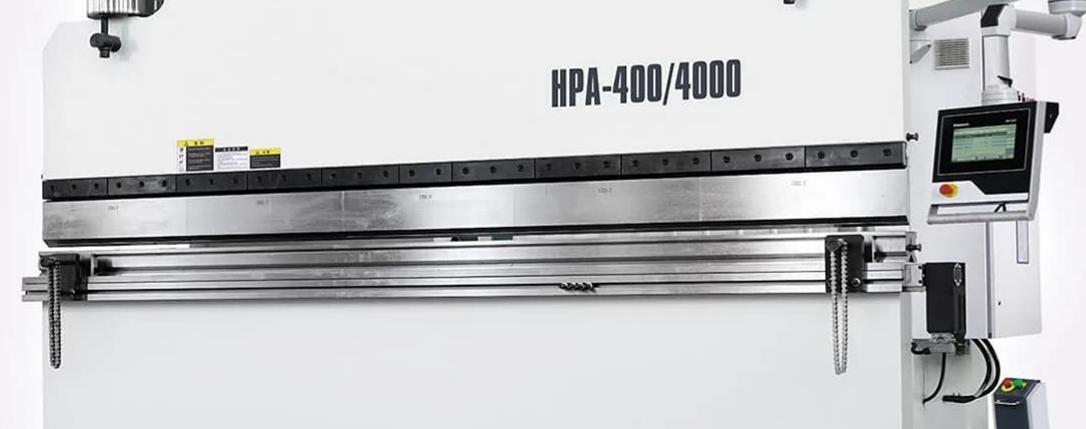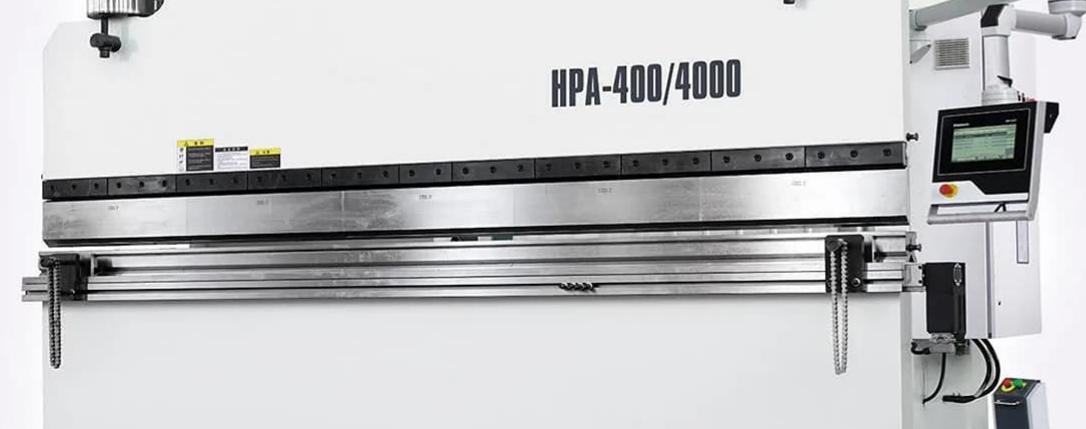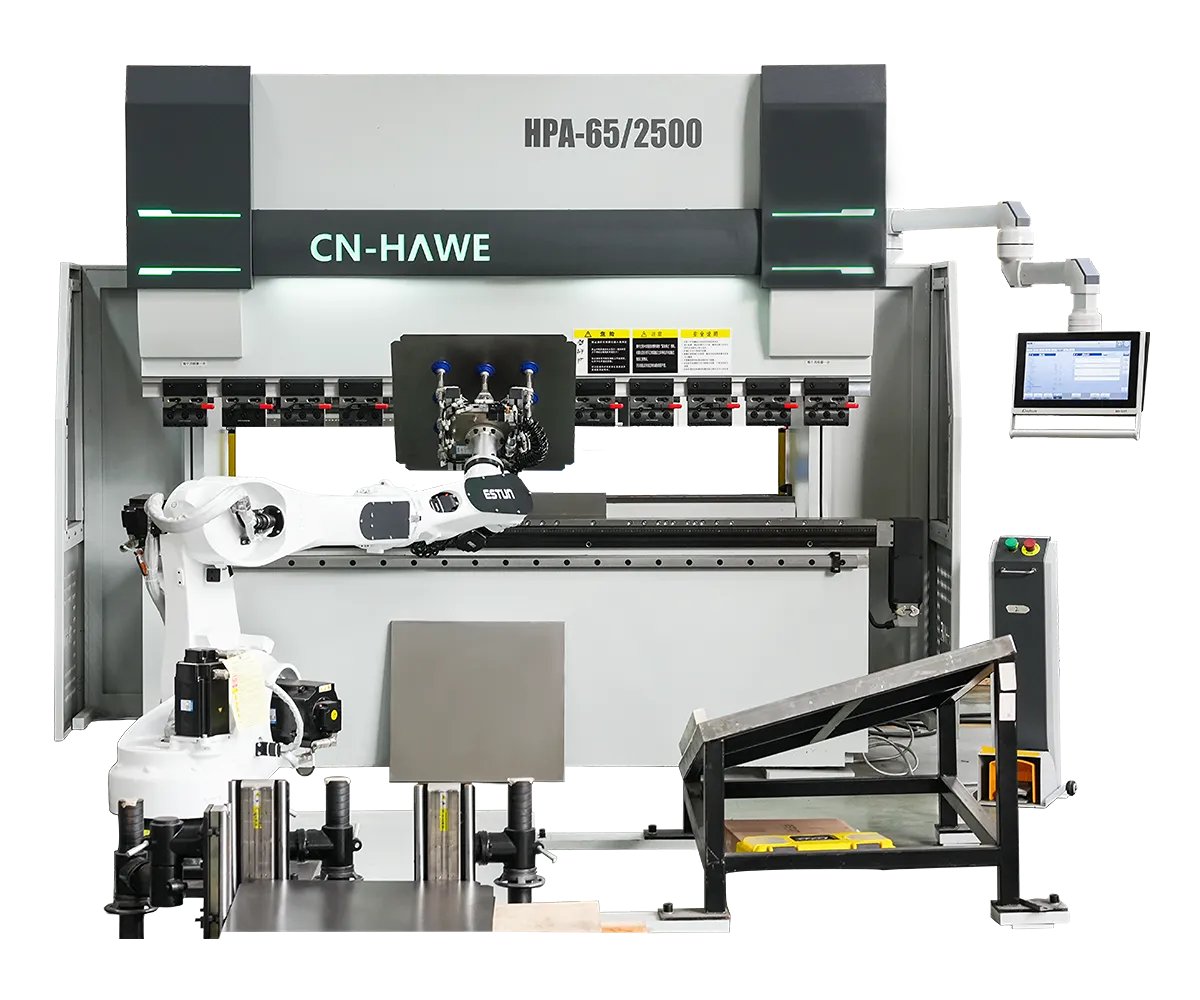
You roll the press brake out from storage, give it a quick clean, and envision a sizeable payout. In your head, it’s easily worth tens of thousands. The dealer inspects it, offers a polite smile, and returns with a figure that barely covers a month’s rent. What just happened?
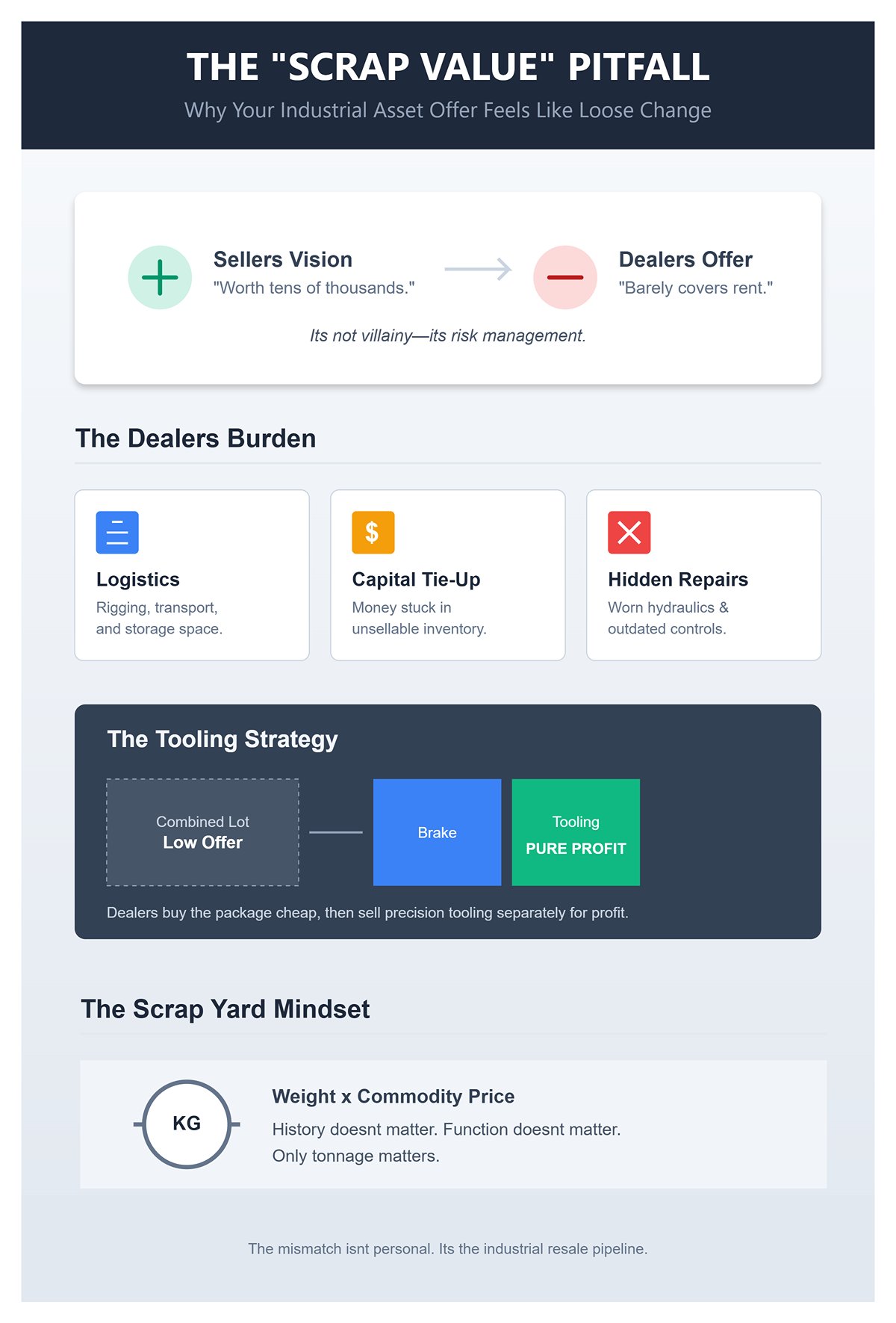
It’s not villainy—it’s risk management. Press brakes and their tooling are niche industrial assets: large, specialized, and difficult to resell quickly. For dealers, that means committing months of floor space, taking on insurance costs, handling rigging and transport logistics, and tying up capital. On top of that lurk potential expenses for unseen repairs—worn hydraulics, outdated control units, or machines that won’t even power on. Factor in the reality that many older brakes actually fetch close to scrap value at industrial auctions because of the small buyer pool and transport/regulatory headaches, and the dealer’s cautious math starts to make sense.
From a dealer’s viewpoint, your tooling doesn’t automatically sweeten the deal. If all they hear is “assorted punches and dies,” they’re picturing mismatched steel with uncertain wear, perhaps from systems no one’s using anymore. Without clear details—system type, total linear footage, tooling profiles, and brand—the only safe valuation they can give is based on scrap weight. That way, they avoid paying up front for something that could turn into expensive, unsellable inventory.
Even when tooling is in prime condition, dealers typically won’t reflect that in their initial offer—they factor in the profit from selling it separately. A worn hydraulic brake might later move for $8,000, while racks of branded, precision-ground American-style dies could yield an equal or greater gross when sold piece by piece. By acquiring your “brake plus tooling” as a single lot, they secure the brake at a price they’re comfortable with and effectively get the tooling at no extra cost—turning your package into their profit scheme.
Scrap buyers approach transactions with a purely numbers‑driven mindset. All that matters to them is the weight on the scale and the current commodity price—whether that’s dollars per ton for steel or per pound for copper. It makes no difference if the brake once produced aerospace components or has sat gathering dust since 2004. When market rates per ton are low, the tonnage of your brake converts into a payout that may seem insultingly small to you, but is entirely logical from the scrap yard’s perspective.
What feels like “pennies on the dollar” is really the product of risk calculations, sluggish market demand, and the way assets are presented—or not presented—to buyers. The mismatch between your expectations and their offer isn’t a personal slight; it’s simply how the industrial resale pipeline works when equipment transitions from one shop to another.
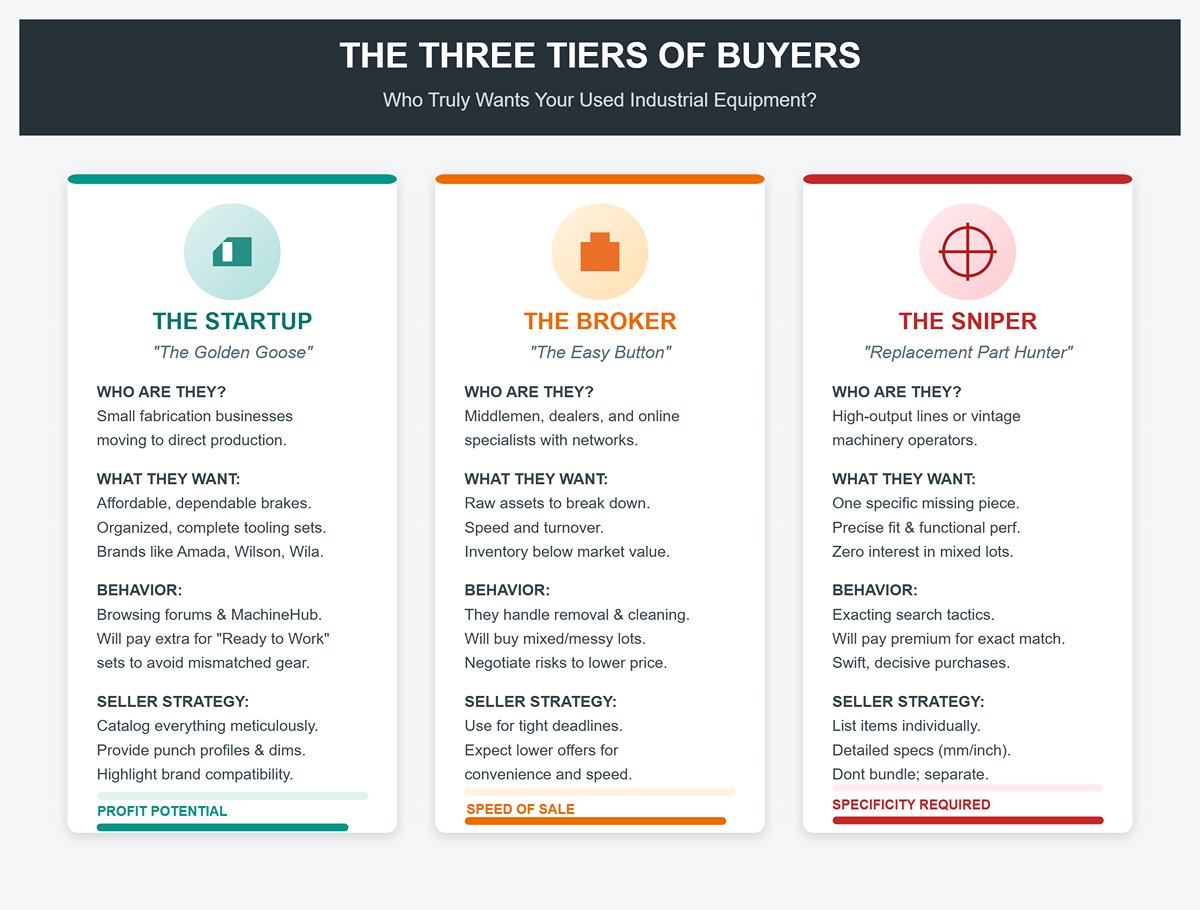
These are small fabrication businesses—often running just one or two brakes—that are in the growth phase, moving from subcontracting into direct production. You’ll find them combing through forums such as Practical Machinist or browsing the used‑tooling sections of MachineHub, hunting for budget‑friendly ways to increase bending capacity. Their perfect buy is an affordable, dependable brake paired with a neatly organized collection of standard punches and dies that can go straight to work.
For these buyers, familiar tooling names like Amada, Wilson, and Wila instantly signal quality and compatibility. They know precisely which tooling system fits their brake—be it American standard tang, European precision style, or Wila quick‑change—and will happily pay extra to avoid the hassle of mismatched gear. Even equipment with some wear is valuable if the dimensions are spot‑on and the brand is trusted; their focus is on boosting capability without paying new‑equipment prices.
For the startup shop, tooling often carries more weight than the brake itself. A complete, usable set of dies—carefully identified and dimensioned—can tip the scales in your favor when they compare listings. Sellers who provide specifics on punch profiles, die openings, lengths, and tang styles are speaking this buyer’s language. Conversely, vague write‑ups or mismatched, unverified sets will drive them toward more clearly documented options and can drag down your potential sale price.
You’ll often spot them in specialized industrial forums, within tight‑knit small business circles, or through pinpointed online searches targeting exact tooling systems. Present a meticulously cataloged offering that clearly aligns with their brake’s specifications, and they may be willing to pay above standard used‑market rates—making them strong contenders for delivering the highest possible return on your equipment.
Brokers act as middlemen with established networks that enable rapid equipment turnover. Their profiles vary—from regional dealers operating warehouses filled with mixed machinery, to online specialists focused exclusively on tooling bundles. Their priority is moving inventory quickly, not running production, and their assessment hinges on purchase cost, the time and resources needed to clean and catalog items, and the potential resale margin relative to current market demand.
To a broker, your brake and its tooling are raw assets ready to be broken down into separately marketable components. For example, a functional mechanical brake from the 1970s might sell promptly to a nearby customer, while any compatible tooling—once cleaned, measured, and labeled with the right brand—would be offered as standalone listings in their portfolio. Because they operate across wide markets on a daily basis, brokers are willing to take on equipment that end‑users might reject, balancing that added uncertainty with a correspondingly lower purchase price.
The main advantage of selling to a broker is speed and minimal hassle. They manage removal, transport, cleaning, and compliance, reducing your role to simply signing the paperwork. However, that efficiency comes at a financial trade‑off: broker offers seldom match the returns possible through direct sales to targeted buyers like startup shops. Their business model depends on acquiring below market value, so negotiations tend to emphasize any perceived risks—unknown condition or incomplete tooling information—to support a discounted offer.
For sellers facing tight deadlines or lacking direct access to niche buyer groups, brokers can serve as the “easy button”—offering a rapid, straightforward transaction at the expense of top‑end pricing. Recognizing this balance helps you decide whether speed or maximum profit aligns best with your goals.
The “sniper” is a highly focused buyer with a single mission: tracking down a specific punch, die, or compatible component to complete an existing setup. They might be running a high‑output production line or keeping vintage machinery operational where OEM parts are no longer available. Their search tactics are exacting—zeroing in on model numbers, die openings measured in millimeters or inches, and tang dimensions specified down to fractions. They’re not browsing for complete brakes—they’re hunting for one missing piece that matters above all else.
This type of buyer is often prepared to pay above the going market rate if it means securing the exact component that will get their production back on track. While condition plays a role, the top priorities are precise fit and functional performance. For example, a pre‑owned Wila sectional in solid condition that matches their current clamping setup could prompt an immediate purchase at a premium price. Any other tooling in your lot that doesn’t meet their exact requirements will be disregarded—they’re hunting one highly specific item and have no interest in mixed assortments.
The difficulty with reaching “snipers” lies in making the connection. Unlike startup shops that browse broadly, these buyers rely on precise searches and direct outreach within professional networks. Listing each tooling item separately—and with detailed descriptions—increases your visibility to them. Presenting everything as a single, unsorted lot can reduce appeal, as they have no inclination to pay for excess metal they’ll never use.
Once a sniper spots exactly what they need in your offering, they tend to make swift, decisive purchases with little negotiation. Thorough, accurate documentation of your tooling can capture these high‑value buyers who favor speed over extended discussions.
Recognizing these three buyer types enables you to tailor the way you present and market your press brake and tooling to match their specific motivations. Startup shops value completeness and easy compatibility, brokers prize quick access and straightforward transactions, and part hunters focus on exact specifications and top accuracy. Aligning your sales approach with the correct group can move you beyond low dealer offers and toward achieving fair market value.
When selling off press brake tooling, the style you hold isn’t just a technical detail—it signals how large and responsive your buyer base will be. Standard American tooling, with its straightforward profiles and widespread compatibility across North American machines, naturally attracts more interest from resellers, smaller fabrication shops, and general maintenance teams. The driving factor is interchangeability: about 70% of press brakes in North America adhere to the American system, meaning far more prospective buyers are seeking ready‑to‑install replacements that require no modifications.
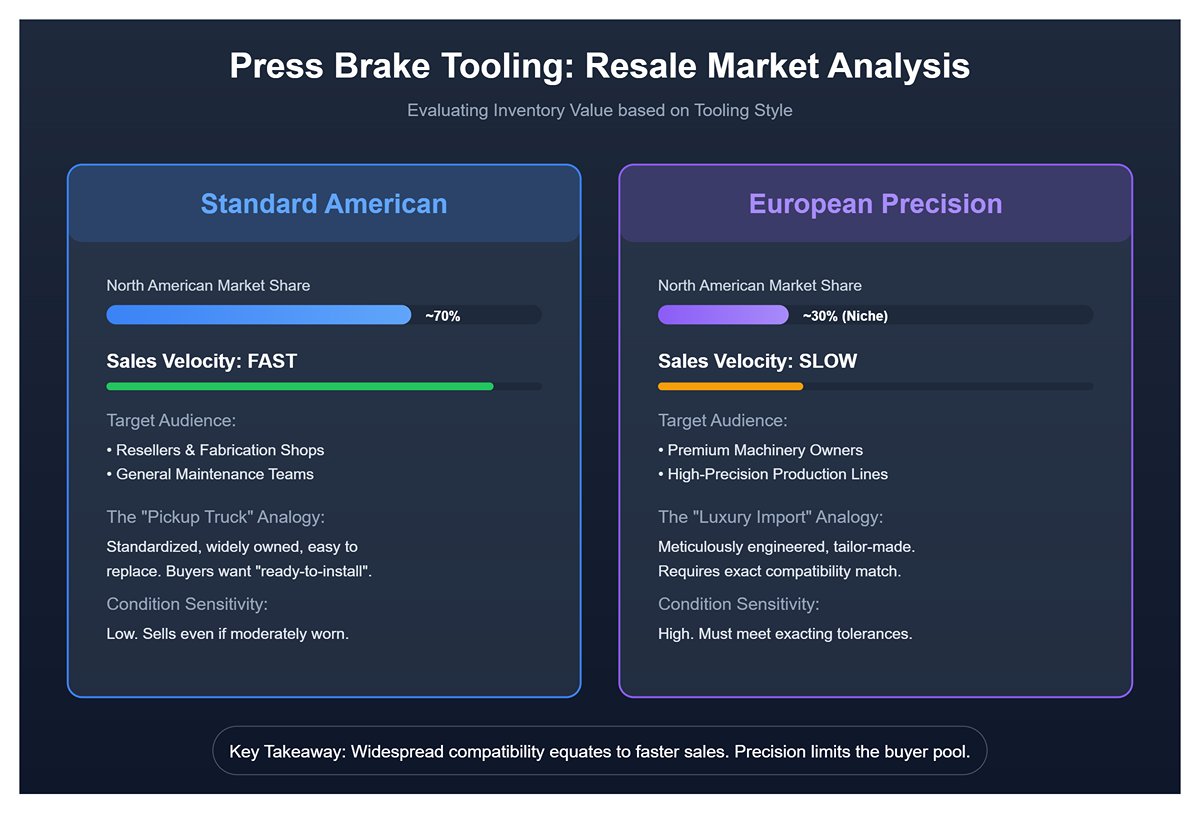
European precision tooling caters to a more niche market. Its expansive clamping surfaces and exacting tolerances deliver real advantages, but they’re best suited for premium machinery and high‑precision production lines. In the resale space, this greatly limits the buyer pool—those interested often require tooling that matches their existing setup without costly modifications. While these factors can push individual transaction values higher, the narrower demand typically slows the pace of sales.
You can think of American tooling like standardized parts for a popular pickup truck—widely owned, easy to replace, and supported by a vast network of suppliers and service shops. European tooling, on the other hand, is akin to tailor‑made parts for a high‑end import: meticulously engineered, prized for exact compatibility, but prone to longer waits for the right buyer to come along. In liquidation, volume comes from universality—the more machines your tooling fits without modification, the faster you’ll close a deal.
The tooling’s condition and whether it forms a complete set can dramatically influence turnaround time. Even moderately worn American tooling often moves quickly, seen by buyers as reliable, all‑purpose equipment. European tooling, typically deployed where precision is paramount, tends to undergo far closer inspection; any noticeable deviation from specifications can stall negotiations.
For sellers, the guidance is clear: if you have American tooling in your press brake inventory, make it the headline feature in your listings and outreach. Point out broad compatibility with major North American machine brands, emphasize how easily it installs, and be ready to set pricing for a swift sale. With European tooling, focus on premium‑tier buyers—OEM sourcing teams, advanced fabrication shops, or operators upgrading a specific model—and plan for a smaller, more selective, but possibly higher‑value audience.
Recognizing these distinctions allows you to move beyond simply showcasing what you own, toward positioning your assets for the realities of buyer reach and decision‑making pace. In the used equipment market, widespread compatibility often equates to faster sales—and faster sales mean cash in hand sooner.
A pre-owned press brake paired with tooling isn’t a single, monolithic asset — it’s actually two separate products targeting distinct buyer segments. The brake itself will be judged against other models based on criteria such as load capacity, bed length, control type, and overall maintainability. Tooling, on the other hand, is evaluated for its compatibility (American, European, or Wila standards), the versatility of its profiles, and its condition or wear level — competing against both brand-new catalogs from suppliers and offerings on second-hand tooling marketplaces. Recognizing these parallel markets makes it clear that deciding whether to bundle or sell separately is far more than a superficial choice; it’s a strategic move that directly shapes your pricing and market positioning.
Bundling the brake and tooling together delivers the greatest impact when the buyer values a plug-and-play solution. Start-up fabrication shops, training centers, and maintenance departments often lack any tooling inventory and need to start producing parts immediately. In such cases, a comprehensive set of widely used punches, goosenecks, acute profiles, and V‑dies that covers common material thicknesses can transform your offer from a “used brake” into a fully equipped, ready-to-run package. That convenience can support a 10–30% price premium, as it spares the buyer from sourcing multiple tools at full retail cost, reducing delays and cutting down on setup complexity.
For seasoned professionals, however, bundling can backfire. Buyers who have standardized on a particular tooling system — especially precision European or Wila designs — often consider mismatched American‑style tooling a liability or excess scrap. Many high-end job shops prefer starting with brand-new, precisely calibrated tooling to guarantee consistent bend quality, making a mixed collection of worn or generic dies essentially worthless to them. Dealers share this view, often stripping out tooling to sell separately and factoring little to no added value for it in the brake purchase. In such scenarios, the phrase “includes tooling” might reduce the offer price instead of driving a premium, if the tooling fails to align with buyer expectations.
A quick way to reach a decision is to apply the “next-week test”: Could your ideal buyer immediately handle 70–80% of their usual jobs with the tooling you’re including? If the answer is yes — and the brake’s tonnage sits in a popular range with strong market demand — selling it as a package can increase appeal and maximize returns. If the answer is no, it’s better to separate the assets. Promote the brake to buyers focused on capacity and control features, and market the tooling to those searching by profile and system, where compatibility is the key selling point.
When you base the decision on the buyer’s practical needs—rather than just your own convenience—you position yourself to maximize the return on both the machine and the tooling, whether they’re sold together or shipped off separately.
| Section | Key Points |
|---|---|
| Overview | A pre-owned press brake and its tooling are distinct assets with separate buyer segments. The brake is judged on capacity, bed length, controls, and maintainability, while tooling is valued for compatibility, versatility, and condition. The decision to bundle or sell separately affects pricing and market positioning. |
| When Bundling Works Best | Bundling adds value when buyers need an immediate, ready-to-run setup. Ideal for start-ups, training centers, and maintenance departments. A complete tooling set covering common materials can justify a 10–30% price premium by offering convenience, reduced setup time, and immediate usability. |
| When Bundling Backfires | Experienced buyers with specific tooling standards (European or Wila) may see mismatched tooling as a liability. They often prefer new, precisely calibrated tooling. Dealers may also strip tooling to sell separately, valuing it minimally. In these cases, including tooling might lower the brake’s appeal or price. |
| Decision Shortcut: “Next-Week Test” | Ask whether the buyer could handle 70–80% of their typical jobs with the included tooling. If yes, and the brake is in a desirable range, sell as a package. If not, separate the assets — market the brake for its specs and the tooling for compatibility and profile. |
| Conclusion | Align the bundling decision with buyer needs. This approach maximizes returns from both the brake and the tooling, regardless of whether they’re sold together or separately. |
If your aim is to move the press brake and tooling today, stop thinking like a seller and start thinking like the person signing the check. Listing the brake as a vague, one‑line package with “tooling included” is the quickest way to leave thousands on the table. The quickest way to gain thousands is to identify—right now—which type of buyer you’re after, and tailor every detail of your listing to the points that trigger them to act.
Begin with your timeline. If you need cash within two weeks, you’re squarely in dealer territory. Dealers prize speed and efficiency: straightforward access, a safe removal process, and clear, unquestionable specs. They will value the brake itself—tooling is just something they’ll later strip and resell. In that scenario, accept their lower offer; your deadline leaves no alternative. But if you can stretch the sale to 60–90 days, you tap into a higher‑paying market—startup shops and precise buyers looking for exact matches to their current setup. These buyers invest in completeness, proof that the brake holds tolerance, and tooling configurations that make production instantly ready.
Align your tooling plan with the brake’s system. Premium European‑style tooling—Wila, Trumpf, Wilson, or Amada—can boost the value of an older brake by 20–50%. If the tooling doesn’t match, treat it as scrap and list the brake on its own—don’t weigh down your offer with mismatched pieces. Well‑organized tooling sets by function—such as a complete gooseneck set for a specific thickness, a hemming kit, or a matched acute set—help buyers picture running their jobs immediately. Disorganized bins, on the other hand, make them picture loading up a truck for the scrapyard.
Documentation is your force multiplier. Include nameplate information, tonnage, backgauge and control model, year of manufacture, total hours run, and clear high‑resolution photos—plus a short video showing the brake in operation. These details turn distant browsers into committed bidders and can raise final sale prices by 30–70% compared to listings that simply say “works fine, as‑is.” Skip the documentation, and you’re left fishing in the shallow waters of the local market.
Think of your matrix like this: the horizontal axis represents speed versus net return, while the vertical axis shows documentation combined with tooling strategy. The sweet spot is the upper‑right quadrant—where thorough documentation and carefully selected tooling meet a more deliberate sales timeline. That’s where the highest profits are found. The lower‑left quadrant—minimal documentation, mismatched tooling, rushed deadlines—belongs to the quick‑deal resellers. Choose your quadrant deliberately and follow through without compromise.
Once you recognize that the brake itself carries most of the baseline value, but the tooling adds real leverage, it becomes clear that selling “whatever happens to be on the rack” is a losing move. The logical and profitable path—the one your decision matrix points toward—is simple: define your ideal buyer profile, remove any elements that diminish value, and showcase the remaining package in a way that makes it easy for someone to imagine starting production immediately.